seo site traffic

Recent SEO

Core Web Vitals 2.0 and Its Impact on SEO Rankings in 2025

Understanding the Impact of Core Web Vitals 2.0 on SEO Rankings in 2025 Google’s Core Web Vitals 2.0 has redefined website performance evaluation by emphasizing user experience more comprehensively than ever before. As a key ranking factor in 2025, these updated metrics play a crucial role in determining how websites perform in search results. Businesses and SEO professionals must understand this shift to maintain and improve their search visibility. What Are Core Web Vitals 2.0? Core Web Vitals 2.0 builds upon the first iteration by refining key performance indicators that measure website health from a user’s perspective. These metrics focus on three critical aspects: Core Web Vitals 2.0 also spotlights real-user data more than synthetic testing, prioritizing performance metrics as experienced on actual devices and network conditions. How Core Web Vitals 2.0 Affects SEO Rankings Enhanced User Experience as a Ranking Signal Google’s algorithms increasingly reward websites that offer seamless, fast, and stable user experiences. Core Web Vitals 2.0 directly correlate with these factors, making them vital for SEO success. Sites that perform well in INP, LCP, and CLS tend to have lower bounce rates, longer visitor durations, and higher engagement—all signals that improve rankings. Focus on Mobile-First Indexing With mobile-first indexing fully implemented, Google evaluates Core Web Vitals predominantly on mobile devices. Websites optimized mainly for desktop but poorly performing on mobile risk losing rank. This shift demands mobile-centric optimization, including faster load times and stable layouts on varied screen sizes. Real-World Data Overrides Lab Testing Google now emphasizes field data (real user measurements) over controlled lab testing for Core Web Vitals. This means genuine experiences from diverse users in different environments influence rankings more heavily. Websites must optimize for consistent performance under varied real-world conditions. Continuous Responsiveness Matters INP assesses the responsiveness of the entire user interaction lifecycle, not just the initial input. This means websites with intermittent delays or sluggish reactions during user sessions may see ranking drops, even if their initial load is fast. Benefits of Optimizing for Core Web Vitals 2.0 Improved Search Visibility: Enhanced rankings for pages delivering excellent user experience. Better Engagement: Faster, stable, and more responsive websites keep users engaged and reduce bounce. Reduced User Frustration: Minimizing layout shifts and delays enhances trust and satisfaction. Competitive Advantage: Early adopters of Core Web Vitals 2.0 optimization gain an SEO edge in search engine results pages (SERPs). Challenges and Considerations Balancing Design and Stability: Ensuring visual stability without sacrificing rich media or interactive content calls for thoughtful design choices. Technical Complexity: Implementing INP improvements requires addressing continuous responsiveness across diverse interactions, which can be technically demanding. Device and Network Diversity: Optimizations must cater to a broad range of devices and network speeds, making performance tuning more complicated. Expert Tips for Core Web Vitals 2.0 Optimization Prioritize Mobile Performance: Use tools like Google Lighthouse and PageSpeed Insights focused on mobile metrics. Reduce JavaScript Execution Time: Streamline scripts to improve responsiveness and interaction times. Reserve Space for Visual Elements: Use CSS attributes to avoid unexpected layout shifts and improve CLS scores. Monitor Real User Metrics: Regularly track Core Web Vitals data via Google Search Console and Chrome UX Report. Optimize Server Response Times: Faster servers contribute to better LCP values and overall speed. Why Core Web Vitals 2.0 Is a Game Changer for SEO Core Web Vitals 2.0 marks a significant evolution in how Google assesses website quality, placing an increased focus on sustained, real-user experience rather than just initial load metrics. In 2025, optimizing these updated metrics is crucial for maintaining strong SEO rankings and offering a competitive, user-friendly website environment. Organizations that embrace these changes will not only improve their search engine positioning but also enhance user satisfaction and long-term engagement. Staying ahead with Core Web Vitals 2.0 optimization ensures your site meets the rising standards of search engines and users alike.

Core Web Vitals 2.0 and Its Impact on SEO Rankings in 2025 Read Post »

Key Features of AI-Powered Keyword Research Tools
Recent SEO

Finding Keywords Faster with AI Tools for Smarter SEO Keyword Research

Finding Keywords Faster and Better with AI Tools for SEO Keyword Research Finding the right keywords is no longer just about brainstorming or relying on traditional keyword tools. Businesses and marketers need to dig deeper to uncover valuable opportunities that align with user intent. This is where AI in keyword research is transforming the way SEO strategies are developed. By harnessing artificial intelligence, organizations can uncover hidden opportunities, save time, and craft smarter content strategies that rank higher on search engines. Why AI is Changing SEO Keyword Research Traditional keyword research often involves collecting search volumes, analyzing competition, and manually filtering results. While effective, it can be time-consuming and often misses deeper insights, such as user intent or semantic relationships between queries. With the advent of AI in SEO, keyword research becomes more intelligent and efficient. AI-powered tools analyze massive datasets in seconds, identify keyword patterns, and even predict upcoming trends. Instead of spending hours filtering through endless lists, marketers can now focus on building strategies around actionable insights. Key Benefits of Using AI for Keyword Research Key Features of AI-Powered Keyword Research Tools How Businesses and Organizations Benefit Incorporating AI in SEO isn’t just about saving time it’s about gaining a competitive advantage. For businesses, faster and more accurate SEO keyword research means: Ultimately, AI equips businesses with the tools to make data-driven decisions, optimize their SEO strategies, and maintain long-term visibility in ever-changing search engines. The integration of AI in keyword research has redefined the way businesses approach SEO. Instead of relying solely on traditional tools, organizations that leverage AI-driven solutions gain smarter insights, uncover hidden keyword opportunities, and deliver content that resonates with their audience. In the future of SEO keyword research, speed, precision, and adaptability are the key differentiators and with AI, those advantages are already within reach.

Finding Keywords Faster with AI Tools for Smarter SEO Keyword Research Read Post »

What is SEO
Recent SEO

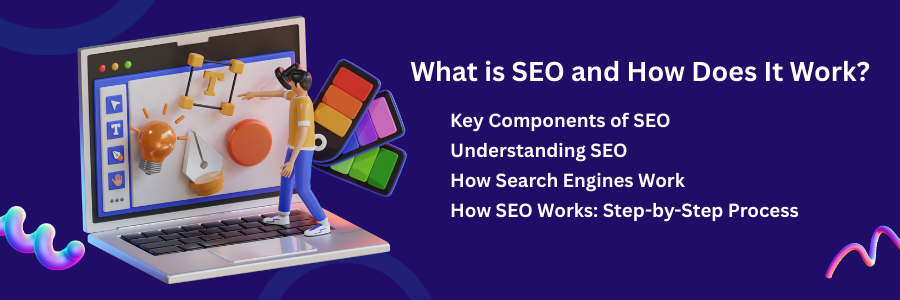
What is SEO and How Does It Work? | Ultimate Beginner’s Guide 2025

If you’ve ever wondered “What is SEO and how does it work?” you’re not alone. SEO, or Search Engine Optimization, is the key to unlocking your website’s potential by boosting its visibility on search engines like Google. Understanding SEO is essential whether you’re a business owner, marketer, or content creator aiming to attract more organic traffic and connect with your ideal audience. This is where Search Engine Optimization, or SEO, comes into play. SEO is a fundamental digital marketing strategy that helps websites rank higher on search engine results pages (SERPs), improving their visibility and attracting organic traffic. This article will dive deep into what SEO is, how it works, and why it is essential for success in the modern online landscape. Understanding SEO At its core, Search Engine Optimization (SEO) is the practice of enhancing a website’s content and technical elements so that search engines better understand and favorably rank it. Unlike paid advertisements, SEO focuses on organic or unpaid search results, driving visitors who discover your site through relevant queries. SEO matters because most online experiences begin with a search engine like Google or Bing. Websites that appear on the first page of search results receive the vast majority of clicks and traffic. In contrast, sites buried deeper in the results often go unnoticed. Therefore, optimizing your website increases the chance that your content reaches potential customers or readers when they are actively searching for related information, products, or services. Search engines are complex software systems designed to scour the internet, collect data, and deliver the most accurate, valuable answers to users’ queries. Understanding how these search engines work is foundational to practicing effective SEO. How Search Engines Work Search engines operate through three main stages: crawling, indexing, and ranking. The algorithms behind ranking are incredibly sophisticated and evolve regularly. They now integrate artificial intelligence and machine learning to better understand user intent, context, and content quality. Staying updated with these changes is essential for successful SEO. Key Components of SEO SEO is multifaceted and involves several components working together to improve website performance in the search results. These components typically fall into three categories: on-page SEO, technical SEO, and off-page SEO. User experience is an increasingly significant ranking factor, covering aspects like fast load times, intuitive navigation, and mobile usability. Aligning SEO strategies with searcher intent ensures users find exactly what they’re looking for, improving engagement and lowering bounce rates. How SEO Works: Step-by-Step Process Implementing SEO effectively involves a systematic approach. Common SEO Myths and Realities Several misconceptions about SEO can mislead businesses and marketers. Understanding these realities helps set realistic expectations and fosters a more effective SEO strategy. Why SEO is Critical for Business Success SEO drives targeted, organic traffic, meaning visitors who are actively searching for products or services like yours. This makes SEO highly effective for generating leads and conversions. Compared to paid advertising, SEO is more cost-efficient over the long run, offering sustainable visibility without ongoing ad spend. Moreover, ranking prominently in search results builds brand credibility and trust, as users often equate high rankings with authority in the field. SEO also supports other marketing efforts by increasing brand awareness and reinforcing your online presence.

What is SEO and How Does It Work? | Ultimate Beginner’s Guide 2025 Read Post »

Benefits of Implementing Answer Engine Optimization
Recent SEO

Benefits of Implementing Answer Engine Optimization

Answer Engine Optimization (AEO) This approach focuses on optimizing content to directly answer users’ queries, improving visibility in search engines, and enhancing user engagement. Below are some key benefits of implementing AEO in your digital strategy. Enhanced User Experience AEO prioritizes user intent by providing precise and relevant answers to specific questions. This focus on delivering direct answers significantly enhances the user experience, saving time and effort for users seeking quick and accurate information. By anticipating and addressing users’ needs, AEO creates a more seamless and satisfying interaction with digital content.  Improved Search Engine Visibility Search engines like Google increasingly favor content that provides clear and concise answers to queries. Implementing AEO means optimizing content for featured snippets, knowledge panels, and other search engine result page (SERP) features. This can lead to improved search engine visibility, as content that effectively utilizes AEO is more likely to be highlighted at the top of search results, thus drawing more attention and traffic. Increased Traffic and Engagement With better visibility comes increased website traffic. When users find the answers they are looking for quickly and easily, they are more likely to engage with the content further. This can result in higher click-through rates, longer time spent on your site, and increased likelihood of users sharing your content. By implementing AEO, you attract more visitors and encourage deeper engagement with your material. Competitive Advantage In the competitive world of digital marketing, standing out is crucial. AEO provides an edge by differentiating your content to be user-friendly and highly relevant. As more businesses adopt AEO, those who optimize effectively will likely gain an advantage over competitors who rely on traditional SEO practices. By being an early adopter of AEO, you can establish your brand as an authority in your field, gaining trust and loyalty from your audience. Better Alignment with Voice Search With the rise of voice-activated devices, voice search is becoming increasingly popular. AEO is particularly beneficial in this context, as voice search queries tend to be more conversational and question-based. By optimizing content to answer these natural language queries, you can improve your chances of being featured in voice search results, reaching an ever-growing audience of voice search users. Building Trust and Credibility Providing direct and accurate answers to users’ questions helps establish your brand as a reliable source of information. This builds trust and credibility with your audience, essential for long-term success. When users consistently find valuable and trustworthy information on your site, they are likelier to return and recommend your content to others. Beyond Ranking: The Tangible Advantages of AEO: Implementing AEO: A Strategic Approach: By focusing on answering user questions, you can unlock the untapped potential of your content, enhance your brand visibility, and drive targeted traffic to your website. Embrace AEO today and position your brand as the go-to resource for information in your industry.

Benefits of Implementing Answer Engine Optimization Read Post »

AEO and Organic Traffic Growth
Recent SEO

The Connection Between AEO and Organic Traffic Growth

One emerging concept that has gained significant attention is Answer Engine Optimization (AEO). As search engines evolve to provide more direct answers to user queries, AEO has become crucial in achieving organic traffic growth. This article explores the connection between AEO and organic traffic growth and how businesses can leverage AEO to enhance their online presence.  What is Answer Engine Optimization (AEO)? AEO is optimizing content to directly answer users’ queries on search engine results pages (SERPs). Unlike traditional SEO, which focuses on keywords and backlinks, AEO emphasizes delivering concise, relevant, and authoritative answers that align with user search intent. As search engines like Google prioritize user experience, they increasingly favor content that provides immediate answers, often displayed in featured snippets or answer boxes. How AEO Impacts Organic Traffic Growth Enhanced Visibility By optimizing for AEO, businesses can secure a coveted spot in search engine answer boxes or featured snippets. These positions often appear at the top of SERPs, even above traditional organic search results. Being featured prominently increases visibility, leading to higher click-through rates (CTR) and, subsequently, more organic traffic. Improved User Experience AEO focuses on meeting user needs by delivering quick and accurate answers. When users find the information they seek promptly, it enhances their experience and builds trust in the brand. Satisfied users are more likely to engage further with the website, explore additional content, and become repeat visitors, all contributing to sustained organic traffic growth. Alignment with Voice Search With the rise of voice-activated devices and assistants like Siri, Alexa, and Google Assistant, voice search has become a significant trend. Voice searches often involve direct questions, making AEO crucial in capturing this traffic. By optimizing for AEO, businesses can ensure their content is voice-search-friendly, tapping into a growing organic traffic segment. Strategies to Implement AEO for Organic Traffic Growth Focus on Long-Tail Keywords Long-tail keywords often mirror the natural language used in queries, particularly in voice searches. By optimizing content for these specific phrases, businesses can effectively target the questions users are likely to ask, increasing the chances of appearing in featured snippets. Structure Content for Clarity Organize content that is easy for search engines to interpret and users to digest. Use clear headings, bullet points, and concise paragraphs to enhance readability and improve the chances of being selected for answer boxes. Provide Comprehensive Answers Ensure that the content thoroughly addresses the potential questions users may have. This involves conducting thorough research to understand user intent and covering topics in-depth. Comprehensive answers signal authority and relevance to search engines, increasing the likelihood of being featured. Optimize for Mobile As mobile searches continue to rise, ensure that your website is mobile-friendly. Fast loading times, responsive design, and easy navigation are crucial elements that align with AEO principles and contribute to a positive user experience. In pursuing organic traffic growth, AEO presents a strategic advantage for businesses aiming to enhance their online presence. By providing direct, relevant, and authoritative answers to user queries, companies can improve their visibility, align with emerging trends like voice search, and foster a better user experience. Integrating AEO into your SEO strategy can be a powerful driver of organic traffic growth as digital landscapes evolve.

The Connection Between AEO and Organic Traffic Growth Read Post »

Best SEO Tools
Recent SEO

The Best SEO Tools for 2025 A Comprehensive Review

Best SEO Tools 2025 With search engines frequently updating their algorithms and user behavior shifting, leveraging the right tools can make all the difference in achieving higher visibility and attracting more organic traffic. In this detailed review, we’ll explore some of the best SEO tools to consider investing in as we head into 2025, along with insights into their key features and upcoming improvements. Ahrefs Ahrefs is widely recognized as one of the top-tier SEO tools, and it is known for its vast database and powerful capabilities. Its array of features includes: Keyword Explorer: This tool helps uncover relevant keywords and provides insights into search volume, keyword difficulty, and click-through rates. Site Audits: Ahrefs systematically scans your website for technical SEO issues, offering actionable recommendations to enhance site performance. Competitor Analysis: Gain insights into your competitors’ strategies by analyzing their backlinks, top-performing content, and keywords they rank for. In 2025, users can expect even more advanced reporting tools and integration with machine learning to predict keyword trends, allowing marketers to make data-driven decisions with greater accuracy. SEMrush SEMrush boasts an all-encompassing suite designed for both SEO and PPC analysis, making it an indispensable tool for digital marketers: Traffic Analytics: Assess your competitors’ traffic sources, user behavior, and demographics to better tailor your marketing efforts. On-Page SEO Checker: This feature recommends optimizing pages based on current rankings and competitor performance. Social Media Management: SEMrush also offers tools for social media marketing, allowing users to manage content and analyze engagement across platforms. In 2025, SEMrush plans to refine its AI capabilities, providing more personalized recommendations and deeper insights into user intent, which will undoubtedly enhance the effectiveness of your SEO strategy. Moz Pro Moz Pro has long been a trusted name in the SEO space, offering powerful tools designed for various aspects of search engine optimization: Keyword Research: Use the Keyword Explorer to discover new keyword opportunities and understand user search behavior effectively. Link Explorer: This tool analyzes your backlink profile and tracks new link-building opportunities. Page Optimization: Moz’s on-page optimization tools provide actionable steps to improve rankings, making it easy to implement changes. For 2025, expect Moz Pro to emphasize local SEO features more, helping businesses optimize for local search results with better tools for tracking local keyword rankings and generating localized content strategies. Google Search Console No SEO toolkit can overlook the importance of Google Search Console, a free yet powerful resource that provides critical insights into how your site performs in Google search results: Performance Reports: Monitor your site’s traffic, performance metrics, and search queries that lead users to your website. Indexing Status: Identify and rectify indexing issues that might be preventing your pages from appearing in search results. Mobile Usability: Ensure your site is mobile-friendly and diagnose issues that could affect the user experience. In 2025, expect Google to enhance user interface features and add more real-time data processing capabilities, allowing quicker responses to indexing and ranking issues. Yoast SEO Yoast SEO remains a top choice for WordPress users, thanks to its intuitive features that streamline the SEO process: Content Optimization: Real-time content analysis helps you write SEO-friendly articles by providing feedback on keyword usage and readability. Snippet Preview: Visualize how your page will appear in search results, allowing for compelling title and meta description optimization. Schema Integration: Easily add structured data to enhance how your website is presented in search engines. In 2025, Yoast plans to incorporate more AI-driven suggestions, making it even easier for users to craft engaging content that ranks high while retaining a natural flow. Surfer SEO Surfer SEO is unique in its data-driven approach to content optimization, focusing on creating high-quality, optimized content: Content Editor: Provides parameters based on competitor analysis, recommending ideal word counts, keyword usage, and related terms to improve relevance. SERP Analyzer: Compare your pages against the top-ranking competitors in real-time, allowing you to adapt your strategy effectively. Upcoming enhancements in 2025 will refine its content planning tools and integrate more collaborative features, permitting teams to work together efficiently on content strategies. Rank Math Rank Math has emerged as a powerful, free alternative to Yoast SEO, gaining traction for its extensive feature set: Advanced SEO Analysis: In-depth SEO analysis based on 40+ ranking factors ensures each page is fully optimized. Built-in SEO Modules: Easily configure on-page elements, like breadcrumbs, 404 monitoring, and redirection, all within the WordPress admin panel. Local SEO Features: Optimize your business for local searches with settings designed to enhance local presence. In 2025, Rank Math is expected to introduce advanced schema features and further automation, making optimizing search engines even more accessible. Screaming Frog Screaming Frog is a technical SEO tool that excels at website audits, making it indispensable for identifying SEO issues: Site Crawling: Conduct in-depth website crawls to find broken links, duplicate content, redirect chains, and more. SEO Spreadsheets: Export data into manageable formats, facilitating easy reporting and analysis. Custom Configuration: Users can customize the crawl settings to focus on specific areas, ensuring thorough audits tailored to their needs. With its roadmap for 2025, Screaming Frog is expected to introduce a more user-friendly interface and enhanced data visualization features, allowing SEO professionals to identify issues and actions needed quickly. The right SEO tools can significantly impact your website’s performance and online presence. As we prepare to delve into 2025, investing in these comprehensive SEO tools will help streamline your optimization processes and enhance your digital marketing strategies. By leveraging the unique features of each tool, you can stay ahead of the competition and continue to drive organic traffic to your website. Choosing the right combination of these tools will optimize your existing content and position you for long-term success in navigating the complexities of search engine algorithms and user trends. As you explore these options, remember that the essence of successful SEO lies in continuous learning and adaptation to the ever-changing digital landscape.

The Best SEO Tools for 2025 A Comprehensive Review Read Post »

Top digital marketing trends 2025
Recent SEM SEO SMO

Top Digital Marketing Trends You Can’t Ignore in 2025

Essential Digital Marketing Trends to Watch in 2025 As we look ahead to 2025, digital marketing continues to evolve, driven by technological advancements, changing consumer behaviors, and emerging platforms. Staying ahead of these trends is essential for businesses seeking a competitive edge. Here are the top digital marketing trends you can’t afford to ignore in 2025. 1. Artificial Intelligence and Automation Artificial intelligence (AI) revolutionizes digital marketing by enabling marketers to gather insights from vast datasets and automate repetitive tasks. In 2025, expect even greater integration of AI in customer service chatbots, personalized email marketing, and predictive analytics. Brands that leverage AI will deliver more relevant content and improve overall customer experiences. 2. Voice Search Optimization With the rise of smart speakers and voice-activated devices, voice search optimization is becoming increasingly important. By 2025, it’s projected that over half of all online searches will be conducted via voice. Marketers should focus on long-tail keywords and natural language to adapt content for voice search queries and enhance discoverability. 3. Video Content Domination Video content has gained immense popularity, and it’s set to dominate digital marketing strategies in 2025. Consumers are drawn to engaging video content, making it a powerful tool for storytelling and brand promotion. Live streaming, short-form videos, and interactive video formats will be essential to successful marketing campaigns. 4. Social Commerce Expansion Social media platforms are evolving into robust e-commerce hubs, allowing brands to sell directly to consumers without leaving the app. Social commerce will continue to grow in 2025 as platforms like Instagram, Facebook, and TikTok enhance shopping experiences. Marketers must develop shoppable content linked to their inventory to capitalize on this opportunity. 5. Sustainability and Ethical Marketing Today’s consumers are increasingly concerned about sustainability and corporate social responsibility. Brands prioritizing ethical practices and environmental sustainability will resonate more with audiences in 2025. Transparency in messaging and showcasing commitment to social causes will become crucial in attracting and retaining customers. 6. Augmented Reality (AR) and Virtual Reality (VR) AR and VR technologies are changing how consumers interact with brands and products. In 2025, expect more brands to leverage these technologies for immersive marketing experiences. For example, allowing customers to visualize furniture in their homes using AR apps or participating in virtual try-on experiences for fashion products will enhance engagement and drive sales. 7. Personalization at Scale Consumers now expect personalized experiences tailored to their preferences. With advancements in data analytics, brands can deliver highly targeted content across various platforms. In 2025, hyper-personalization using AI to analyze user behavior and preferences will be essential for marketers looking to build stronger connections with their audience. 8. Enhanced Data Privacy Compliance As data privacy regulations continue to evolve, brands must prioritize compliance and transparency in their data collection practices. By 2025, consumers will be increasingly aware of how their data is used, making it essential for marketers to build trust and ensure data security. Prioritizing user consent and implementing robust privacy policies will be key factors in maintaining customer relationships. 9. The Rise of Community-Driven Marketing As consumers seek authentic connections with brands, community-driven marketing will gain traction in 2025. Brands that foster genuine online communities around their products or services will encourage loyal customer relationships. Engaging with audiences through forums, social media groups, and interactive content can help build brand loyalty and turn customers into advocates. 10. Multi-Channel Marketing Integration With consumers engaging with brands across various platforms, a multi-channel approach will be vital for success in 2025. Integrating marketing efforts across social media, email, and websites ensures a consistent brand experience. Marketers should focus on cohesive messaging while adapting content to suit each channel’s unique audience. As we look towards 2025, digital marketing continues to evolve rapidly, driven by technological advancements and changing consumer behaviors. One of the key trends to watch is the increasing use of artificial intelligence and machine learning in personalizing customer experiences. These technologies allow highly targeted marketing strategies to predict consumer preferences and deliver tailored content in real-time. Another significant trend is the rise of voice search optimization, as more consumers use voice-activated devices for online searches, necessitating a shift in SEO strategies. Additionally, video content remains paramount, with short-form and live video formats gaining traction across social media platforms. Sustainability and ethical marketing are also becoming crucial as consumers increasingly Favor brands that demonstrate environmental consciousness and social responsibility. Finally, augmented reality (AR) integration in digital marketing is set to enhance customer engagement by offering immersive experiences, particularly in the e-commerce sector. Staying ahead of these trends will be essential for marketers aiming to connect effectively with their audiences in 2025.

Top Digital Marketing Trends You Can’t Ignore in 2025 Read Post »

Recent SEO

Proven SEO Strategies to Improve Your Website Ranking Fast

SEO Strategies that Help Your Website Ranking in SERP In the ever-evolving world of digital marketing, having a strong website ranking is crucial for driving traffic and boosting visibility. If you want to quickly improve your website’s ranking, consider implementing the following proven strategies. 1. Optimize for Mobile With more users accessing the web via mobile devices, Google prioritizes mobile-friendly websites. Ensure your site is responsive, loads quickly on mobile, and maintains a user-friendly interface across all devices. Use Google’s Mobile-Friendly Test tool to evaluate your site’s compatibility. 2. Improve Page Load Speed Page loading speed is a significant ranking factor. Faster websites provide a better user experience and can lead to lower bounce rates. Utilize tools like Google PageSpeed Insights to identify areas for improvement. Optimize images, leverage browser caching, and minimize JavaScript to enhance load times. 3. Conduct Keyword Research Effective keyword research helps you discover what your audience is searching for. Use tools like SEMrush, Ahrefs, or Google Keyword Planner to identify high-volume, low-competition keywords. Incorporate these keywords into your content, titles, meta descriptions, and headers. 4. Create High-Quality Content Content is king when it comes to SEO. Regularly publish informative, engaging, and original content that answers your audience’s questions or solves their problems. Aim for a mix of formats, articles, videos, and infographics to keep visitors engaged. Remember to update old content to keep it relevant. 5. Optimize On-Page SEO Optimize your website’s on-page elements, including title tags, meta descriptions, headers, and image alt text. Ensure your primary keywords are included in these areas without overstuffing. Also, use internal linking to guide visitors to other relevant pages on your site and enhance navigation. 6. Build Quality Backlinks Backlinks from reputable sources signal to search engines that your content is valuable. Focus on building relationships with other website owners to earn high-quality backlinks. Guest blogging and participating in industry forums and social media can help you establish these connections. 7. Utilize Social Media Social media platforms can drive substantial traffic to your website. Share your content, engage with followers, and participate in discussions within your niche. Platforms like Facebook, Twitter, LinkedIn, and Instagram can amplify your reach and promote your content to new audiences. 8. Leverage Local SEO If you operate a local business, don’t overlook local SEO strategies. Ensure your Google My Business listing is accurate and complete. Encourage satisfied customers to leave reviews, enhancing your visibility in local search results. 9. Monitor Analytics and Adjust Strategies Use tools like Google Analytics and Google Search Console to monitor your performance. Track metrics like organic traffic, bounce rates, and average page duration. Regularly analyze this data to understand what’s working and needs adjustment, allowing you to refine your strategies continuously. 10. Stay Updated on SEO Trends The digital landscape constantly shifts, and staying informed about the latest SEO trends and algorithm changes is essential. Follow industry blogs and forums, attend webinars, and participate in online courses to keep your skills sharp and strategies effective. Improving your website’s ranking swiftly requires a strategic approach to SEO that combines both on-page and off-page techniques. Start by optimizing your site’s content with relevant keywords, but ensure they flow naturally to avoid keyword stuffing. Focus on creating high-quality, engaging content that provides value to your audience and encourages longer visit durations. Utilize SEO-friendly titles, meta descriptions, and header tags to enhance search engine visibility. Improving website speed and ensuring mobile-friendliness are crucial technical aspects significantly impacting rankings. Additionally, secure quality backlinks from reputable sites, as they can boost your site’s authority and credibility. Regularly update your content and perform SEO audits to identify and rectify issues. Lastly, engage with your audience on social media to drive more traffic and increase your site’s reach. By implementing these strategies, you can effectively enhance your website’s ranking relatively quickly. .

Proven SEO Strategies to Improve Your Website Ranking Fast Read Post »

Recent SEO

Create Effective SEO Reports with These Tools

How to Create Effective SEO Reports with These Tools? In digital marketing, SEO (Search Engine Optimization) reigns supreme. Whether you’re a freelancer managing multiple clients or part of a large corporation, understanding how to create effective SEO reports is crucial for showcasing your efforts and results. But where do you start? Fortunately, there are plenty of tools available that can streamline this process and provide valuable insights. Here’s how to harness these tools to create comprehensive and insightful SEO reports. Create Effective SEO Reports with These Tools 1. Define Your Objectives Before data collection, clarifying your SEO report’s objectives is essential. Are you reporting on keyword rankings, organic traffic growth, or backlink acquisition? Establishing clear goals will guide the type of data you collect and present. 2. Choose the Right Tools: Various tools are available to help you gather the necessary data for your SEO reports. Here are some highly recommended ones: Google Analytics: This is a must-have for any digital marketer. You can track website traffic, user behavior, and conversion rates, giving insights into how SEO impacts your overall business goals. Google Search Console: This tool provides information on your site’s performance in Google search results. You can monitor keyword rankings, click-through rates (CTR), and see any SEO issues that need addressing. SEMrush: This powerful tool combines data across various SEO metrics, including keyword analysis, competitor research, and site audits. It helps you understand your performance and how you stack up against your competitors. Ahrefs: Renowned for its backlink analysis, Ahrefs provides comprehensive data on your site’s link profile, keyword rankings, and content performance. Moz Pro: With its user-friendly interface, Moz Pro offers keyword tracking, site audits, and other essential metrics that make reporting straightforward. 3. Collect and Analyze Data Once you’ve selected your tools, start collecting data based on your objectives. For example, Traffic Analysis Google Analytics focuses on organic traffic metrics, including new users, page views, and average session duration. Identify trends over time and compare them to your set goals. Ranking Performance: Use Google Search Console or SEO tools like SEMrush or Ahrefs to analyze keyword rankings. Look for keywords that are performing well and those that need improvement. Backlink Profile: Utilize Ahrefs or Moz Pro to evaluate your site’s backlink profile. Consider the number of backlinks, their quality, and how they contribute to your overall SEO strategy. 4. Create the Report Structure An effective SEO report should have a clear structure. Here’s a suggested outline: Executive Summary: A brief overview of the report highlighting key achievements and areas for improvement. Objectives and Goals: Reiterate what the SEO efforts aimed to achieve. Traffic Analysis: Present data from Google Analytics, including charts and visuals, to make the information digestible. Keyword Performance: Summarize how target keywords rank and any observed trends. Backlink Analysis: Provide insights into the status of your backlink profile and its impact on SEO efforts. Recommendations: Suggest actionable next steps based on the data presented, such as targeting additional keywords or strategies for improving link-building. 5. Visualize Your Data Make your SEO report visually appealing and easily understood. Use graphs, charts, and infographics to represent complex data. Tools like Google Data Studio or Excel can help create visuals that enhance comprehension. 6. Review and Revise Before sharing your report, review it for clarity and accuracy. Ensure that all data is up-to-date and reflects the current state of your SEO efforts. Getting a second opinion from an expert or another stakeholder may also be beneficial. 7. Share and Discuss Once your report is polished and ready, schedule a meeting to present and discuss your findings with stakeholders. Engage in a dialogue about the insights from the report and how to move forward with your SEO strategy. By leveraging these tools and following a systematic approach, you can present clear, actionable insights highlighting your SEO efforts’ impact, whether growing a brand’s online presence or focusing on KPI achievements; a well-crafted SEO report is vital for demonstrating success and planning future strategies. Start implementing these tips today and elevate your SEO reporting game!

Create Effective SEO Reports with These Tools Read Post »

Maximizing Traffic and Leads with SEO
Recent SEO

Maximizing Traffic and Leads: The Power of Service Area Pages in SEO

Search Engine Optimization (SEO) is still essential for businesses that want to improve their online visibility and attract organic website traffic. Service Area Pages have emerged as a powerful tool for companies with a localized focus. These pages help improve search engine rankings and play a crucial role in attracting relevant traffic and generating quality leads. Understanding Service Area Pages Service area pages are website sections that showcase the different regions or locations where a business offers services. These pages are beneficial for companies that operate in several geographic locations or target specific local markets. They act as gateways for potential customers searching for relevant services in their area. The Role of Service Area Pages in SEO Local SEO Boost: Optimizing service area pages with location-specific keywords can boost businesses’ local search visibility, especially in Google’s Local Pack and Maps listings. Targeted Audience Reach: Businesses can use these pages to customize their content based on the requirements and choices of their target audience in different locations. Businesses can connect more effectively with potential customers by addressing local concerns, such as proximity to service areas or regional preferences, and make their message resonate. Improved Website Structure: Including service area pages in a website’s structure enhances user experience and helps search engine crawlers understand the business’s geographical relevance. Link Building Opportunities: Local link building is possible through service area pages. Businesses can acquire relevant backlinks by partnering with local businesses, organizations, or directories to strengthen their local SEO efforts. Best Practices for Creating Service Area Pages Keyword Research: Conduct comprehensive keyword research to identify location-specific keywords relevant to your business and target audience. Strategically integrate these keywords into the content of your service area pages, including headings, meta tags, and copy. Content Optimization: Craft unique and informative content for each service area page. Highlight the unique aspects of each location, such as local landmarks, community events, or testimonials from satisfied customers in that area. Straightforward Navigation: Make sure service area pages are easy to navigate and integrate with the website. Use clear calls-to-action to guide visitors to take desired actions, such as contacting or requesting a quote. Mobile Optimization: Optimize service area pages for mobile responsiveness and fast loading times to enhance user experience and improve search engine rankings in the era of mobile devices. Consistent NAP Information: Maintaining a consistent Name, Address, and Phone Number (NAP) across all service areas and online directories builds trust with users and search engines, reinforcing the business’s credibility. Monitoring and Measuring Success Once service area pages have been implemented, it is important to monitor their performance and measure their impact on website traffic, engagement, and lead generation. You can use analytics tools like Google Analytics and Google Search Console to track key metrics, including organic traffic, keyword rankings, and conversion rates attributed to service area pages. Analyzing this data regularly can help you identify areas that need optimization and refinement, ensuring that you continue improving your SEO’s effectiveness.

Maximizing Traffic and Leads: The Power of Service Area Pages in SEO Read Post »

AI in SEO
Recent SEO

SEO Trends in 2024 and How Artificial Intelligence (AI) helps your website

You’ll love this article to optimize your website in 2024. Looking back on 2023, we see some crucial information on the latest updates that will influence SEO strategies beyond 2024. EEAT – First-hand Experience Is Now More Important Than Ever With the 2023 update of the EEAT guidelines, first-hand experience is now the central ranking factor, prioritizing authentic, experience-based content over generic information. Latest Algorithm updates are placing more weight on author entities. So, make sure you keep that in mind moving forward! One of the latest algorithm updates placed a higher emphasis on author entities. Google has improved its ability to identify and appreciate content authors. This means that content linked to authoritative authors now has increased credibility and trustworthiness, thereby influencing rankings more than ever before. AI Tools Offer Search Capabilities Although AI tools have improved search capabilities, people still rely on Google for their queries. Despite advancements, people haven’t changed their search behavior. Artificial Intelligence (AI) can potentially increase business scale, but it also highlights the importance of providing unique and original value to customers. AI presents both opportunities and threats to the world. AI can generate content that closely resembles what humans created. Similar to what’s already out there? It’s pretty amazing, but we need to be careful that we don’t end up with too much of the same thing. If we all start relying only on AI for content creation, then we might end up with a lot of generic content that looks the same. This is also something to think about for your own website. As a content creator, it’s essential to acknowledge the potential risks that may arise from relying too heavily on something. AI-generated content. In particular, there is a risk of overusing AI to fill your blog with content that is largely based on previously published material. By staying vigilant and striking the right balance between AI and human creativity, you can ensure that your content remains fresh, original, and engaging for your audience. How to Use AI? AI can assist in various ways to boost productivity. Here are some examples: Ask AI to edit your draft and establish voice and tone. Summarize information that has already been provided. Make the existing copy shorter. Turn lengthy paragraphs into bullet points. Let’s start by creating general outlines with a basic structure without getting into the specifics. Afterward, you can add your expertise and insights to make it more detailed and comprehensive, which only a human touch can provide. Alternatively, you can give content writers or subject matter experts these outlines to use as a framework and build upon them.

SEO Trends in 2024 and How Artificial Intelligence (AI) helps your website Read Post »

Understanding the Difference Between 404 and 301 Redirects
Recent SEO

Understanding the Difference Between 404 and 301 Redirects

Have you ever stumbled upon a broken link while browsing the web? You might have encountered a frustrating “404 Page Not Found” error, leaving you wondering if the page truly exists. On the other hand, you may have noticed seamless transitions when clicking on certain links, seemingly whisked away to another page without a hitch. These smooth redirects are often powered by a “301 Redirect.” In this blog, we will delve into the intriguing world of HTTP status codes and explore the key differences between 404 and 301 redirects. 1. What is a 404 Error? The 404 error, also known as “Not Found,” is an HTTP status code that indicates the requested resource or web page cannot be located on the server. It is the default error message displayed when the server fails to find the specified URL or when the resource is intentionally removed or moved without proper redirection. Consequently, the visitor is presented with a standard 404 page, which can be customized by website owners to offer helpful information or guidance to the user. 2. Understanding the 301 Redirect The 301 redirect, known as “Moved Permanently,” is another HTTP status code that informs browsers and search engines that the requested URL has been permanently moved to a new location. When a server returns a 301 status code, it also includes the new URL where the requested resource can be found. This tells the user’s browser and search engine crawlers that the original URL has been permanently replaced and any future requests should be directed to the new address. 3. The Core Difference At first glance, the primary distinction between the two redirects might seem evident – one indicates a broken or missing page (404), while the other signifies a permanent relocation (301). However, the implications and use cases of each status code are much more nuanced. The 404 error is a client-side response code, meaning the issue lies within the client’s (user’s) request. It suggests that the server cannot locate the requested page at the provided URL. This could be due to a typographical error, a deleted page, or a broken link. While a 404 error can be frustrating for users, it is a natural part of the web landscape, and website owners must handle it gracefully to enhance the user experience. On the other hand, the 301 redirect is a server-side response code, meaning the issue lies within the server’s configuration. It is a strategic tool used by website owners to manage URL changes effectively. When a website undergoes a significant restructuring, migration, or rebranding, 301 redirects play a crucial role in preserving search engine rankings, link equity, and user experience. By permanently redirecting the old URL to the new one, the website signals to search engines that the new address should replace the old one in their indexes. 4. When to Use 404 and 301 Redirects Knowing when to use each redirect is essential for maintaining a healthy website and retaining users. Use a 404 error when: • A page has been removed permanently with no replacement. • There’s a typographical error in the URL. • The requested page has been temporarily taken down for maintenance. Use a 301 redirect when: • A page has been permanently moved to a new location. • You want to redirect users from an old URL to a new one. • You need to consolidate multiple pages into a single URL. In the ever-evolving world of the internet, understanding the nuances of HTTP status codes like 404 and 301 redirects is crucial for website owners and developers. While the 404 error points out missing or broken pages, the 301 redirect facilitates smooth transitions and preserves SEO value during significant changes. By leveraging these status codes effectively, website administrators can enhance the user experience, maintain search engine rankings, and ensure a seamless journey through the vast digital landscape.

Understanding the Difference Between 404 and 301 Redirects Read Post »

Reach Me
Scroll to Top